Overview
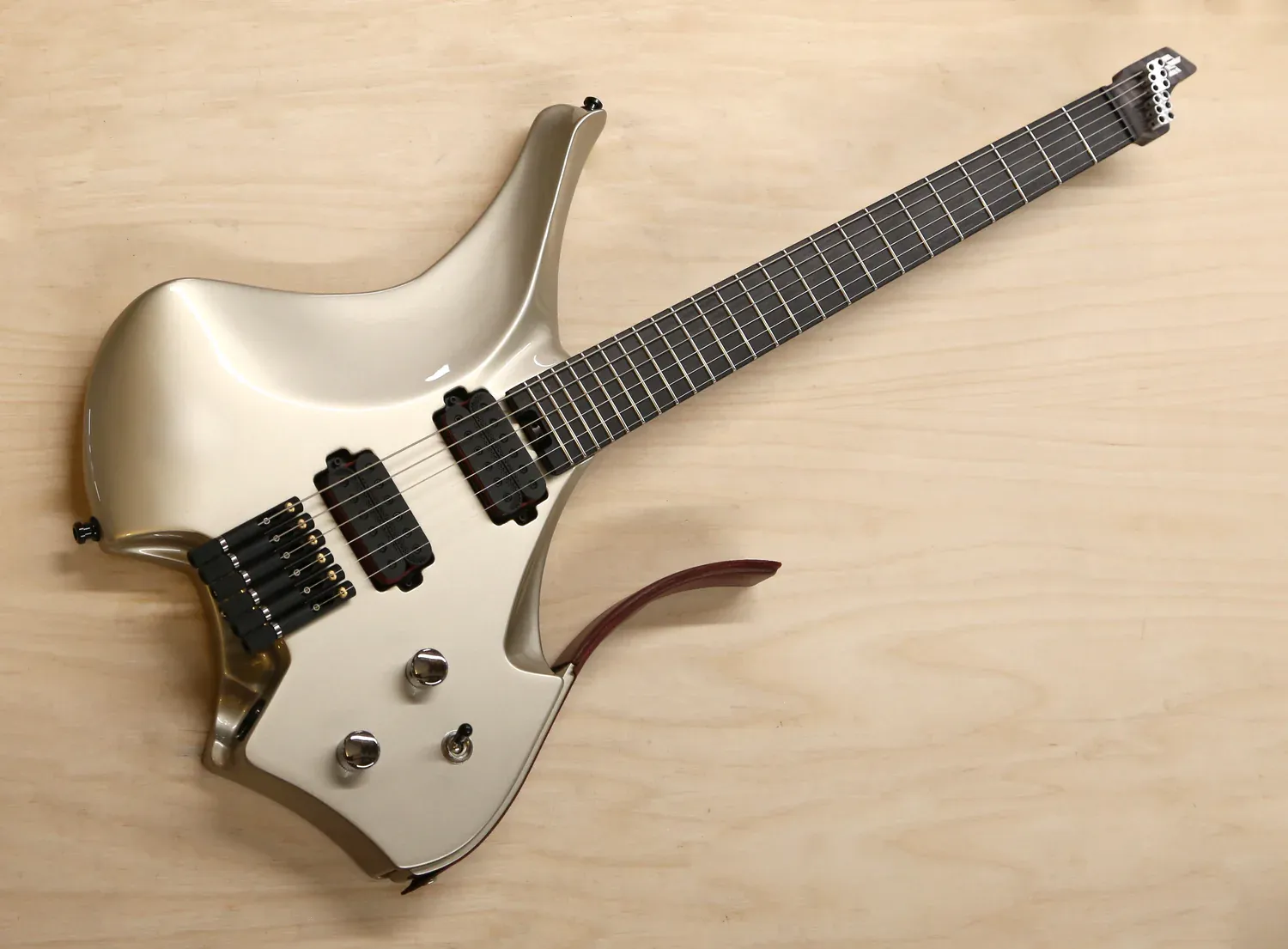
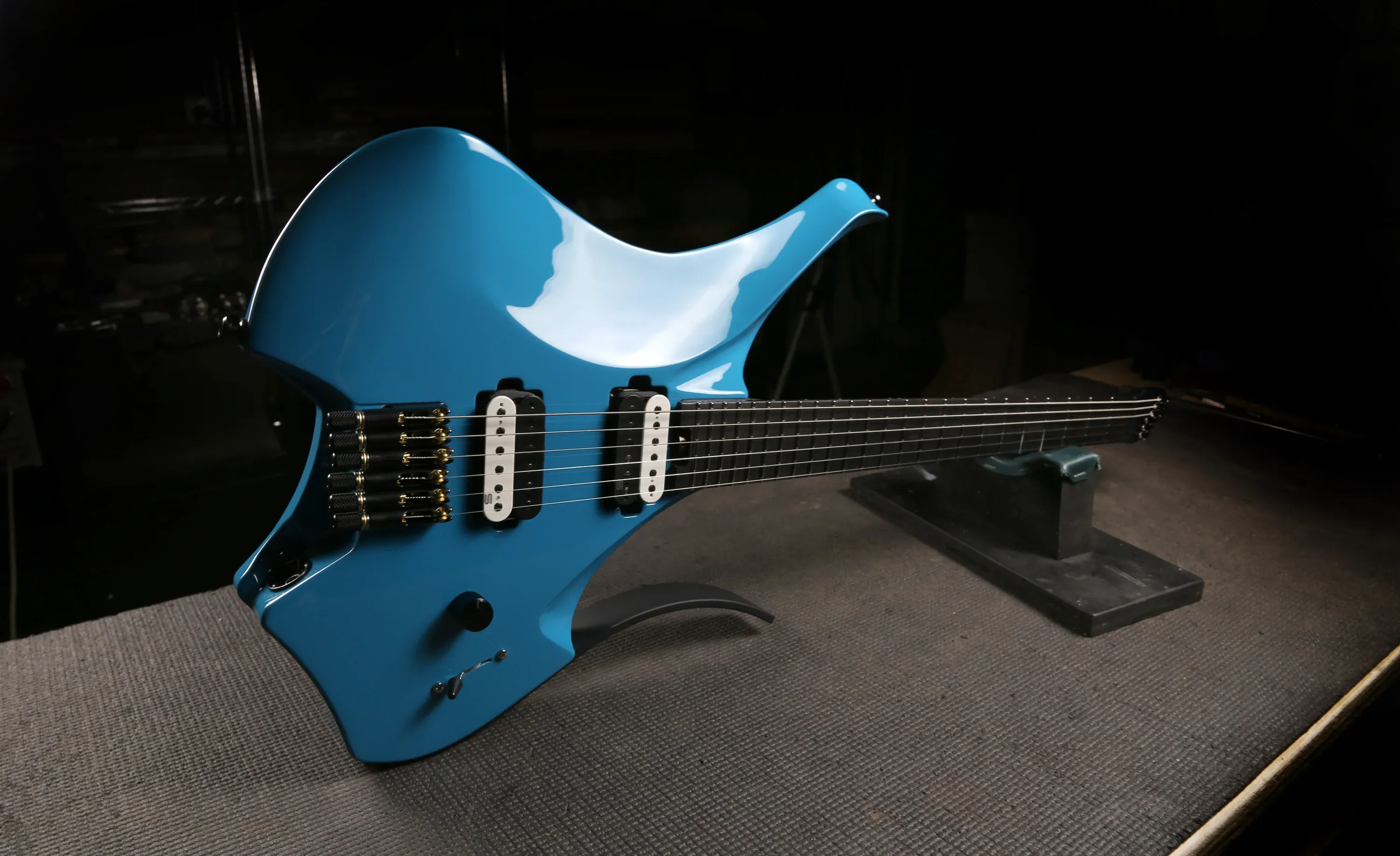
Headless guitars remove the traditional headstock and place the tuning system at the bridge. The result is a shorter, lighter instrument with modern hardware, a distinctive silhouette, and practical ergonomic advantages.
The format
What is a headless guitar?
Instead of conventional tuning machines at the end of the neck, a headless guitar uses specialized bridge-mounted tuners. The scale length remains familiar while the overall instrument becomes more compact and travel-friendly.
Ned Steinberger brought the format to prominence in the late 1970s, and later builders such as Ola Strandberg helped make headless construction synonymous with forward-looking guitar design.
Practical advantages
What changes when the headstock goes away?
The difference is immediately physical. Less mass at the far end of the neck changes how the guitar sits, moves, and travels; it can also change the response and attack players hear under the fingers.
Lighter weight
Removing the tuners and excess neck length can reduce fatigue over a long session.
Ergonomic balance
Less weight beyond the nut helps the instrument stay centered and can reduce neck dive.
Compact dimensions
The full playing scale fits into a smaller package without sacrificing fretboard length.
A bright response
Many players hear a quick, articulate, and snappy character from the format.
Modern presence
The unconventional outline gives a custom build a strong identity before a note is played.
Physical relief
Reduced weight and improved balance may help players managing posture-related discomfort.
The tradeoffs
What should a player consider?
Headless hardware has its own restringing and tuning routine, so there can be a short learning curve. Its brighter response and different sense of balance are not universal preferences, and some conventional wall hangers are not designed to hold the abbreviated end of the neck.
Those are solvable considerations, but they are worth discussing before choosing the configuration.
Commissioning
Why make it custom?
A custom headless build can be shaped around the player rather than the limits of a production model. Weight targets, extended ranges, multiscale layouts, scale length, finish, and the smallest aesthetic choices can all be resolved as one design.
Tailored to the player
Neck, body, electronics, and hardware are selected around a real playing style.
Weight control
Material choices and carving can target a comfortable finished weight.
Extended options
Multiscale fretboards, alternate scale lengths, and extended ranges can be integrated from the start.
A direct relationship
The owner works with the luthier rather than configuring an anonymous factory order.
Aesthetic freedom
Themes, finishes, materials, and small motifs can carry a personal idea through the whole instrument.
The Dean Gordon approach
Improving the headless format.
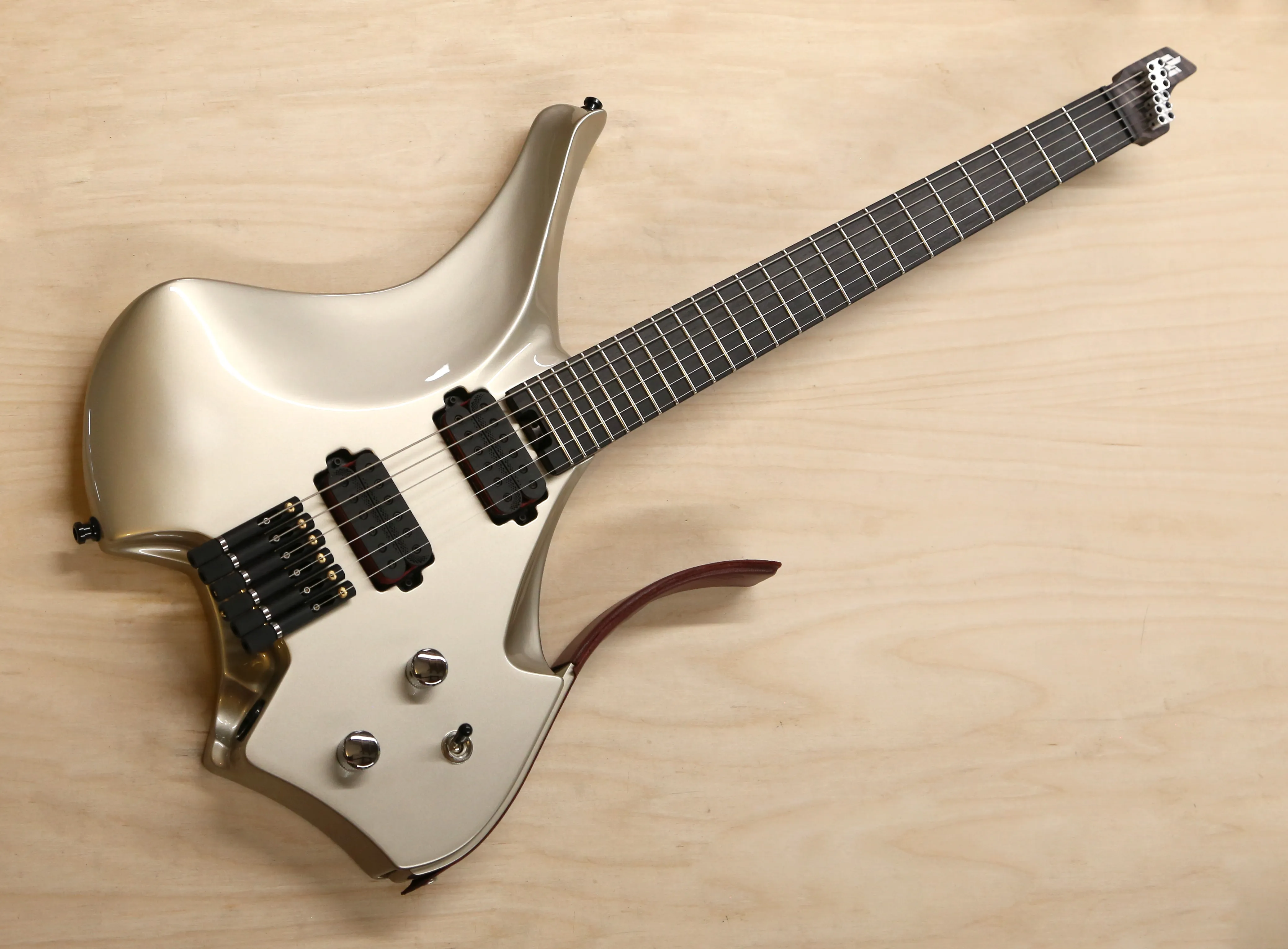
Dean Gordon’s headless designs use the format as a starting point, then refine the ergonomics, access, and everyday utility around it.
Enhanced ergonomics
Body contours and weight distribution are resolved for seated and standing use.
Superior fret access
The lower-horn cutaway and targeted weight reduction leave room for the fretting hand.
Iconic design
The compact neck termination is integrated into the identity of the Virtus and Mirus.
A functional headpiece
An angled, dual-plane design creates a controlled string break over the nut for stable playability.
Wall-hanger compatibility
The headpiece retains enough functional structure to support practical display solutions.