
Overview
Once a guitar costs more than $3,500, the real question is not whether it can feel and sound professional. It is where the money goes, how much of the instrument is truly yours, and what remains after the sale.
The real comparison
What are you paying for?
A high-end factory instrument from a major custom shop can be excellent. An independent luthier can use similarly premium materials and hardware. The difference is that a factory must support volume, distribution, corporate marketing, artist programs, and margin, while a small builder’s livelihood depends on a limited number of instruments and the details inside each one.
For a small workshop, this is competition every day. The meaningful comparison is value, emotional connection, freedom of design, and long-term satisfaction—not a specification sheet alone.
Small builders take on very large opponents. That pressure is part of why every instrument has to matter.
The factory proposition
What a high-end production guitar offers.
Large brands bring reputation, visibility, artist endorsements, influencer coverage, and established dealer networks. Those advantages make a factory instrument familiar and easy to understand before it reaches a player’s hands.
The customization is often menu-driven and the work is organized around batches. Premium-looking options can carry markups far beyond their material cost, while language about rarity may describe a model that is still made repeatedly within a production system.
Menu-driven choice
The customer selects from combinations the production line is already set up to deliver.
Batch production
Even a custom-shop model moves through a repeatable system shared with other instruments.
Aesthetic markups
A figured top that adds modest raw-material cost can multiply the retail price of an option.
Perceived rarity
Limited colors and configurations can feel singular while still being reproduced at scale.
Inherited formulas
Many factory designs lean on familiar silhouettes and the cultural history already attached to them.
History and identity
A famous shape carries someone else’s story.
A Stratocaster can call up Hendrix or Beck; a Les Paul can call up Page. That lineage is powerful, but a new owner cannot recreate the moment when those associations were first made.
A boutique instrument begins with less inherited mythology. That blank slate gives the player a chance to build a personal history with an object that was not designed to repeat a familiar icon.
Resale is not a guaranteed factory advantage either. A five- or seven-thousand-dollar custom-shop guitar may still struggle to recover half its price, despite being part of a recognized brand.
True boutique work
Small scale changes the relationship.
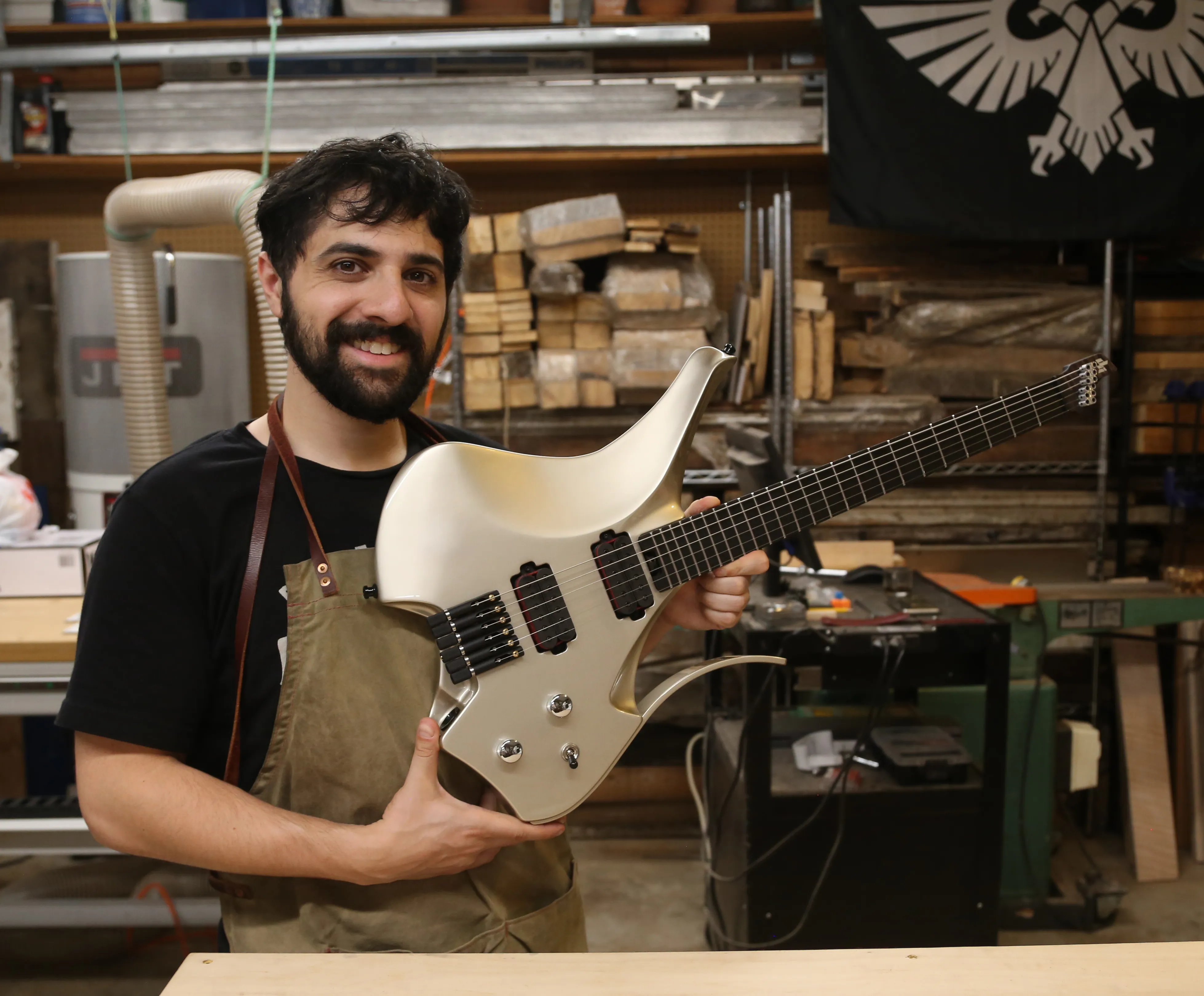
Independent makers such as Dean Gordon, Stradi, Teuffel, and OD work at a scale where the builder and the build remain closely connected. The instrument is a singular creation tied to the maker’s judgment and life’s work.
One-at-a-time attention
The guitar is followed as an individual object rather than a unit in a production run.
True customization
Ideas can move beyond a preset menu when they serve the player and the design.
Innovation over marketing
Time and money can go into construction, ergonomics, and new solutions instead of campaign reach.
Personal connection
The player speaks with the person making the decisions and doing the work.
The emotional economy
A commission supports the work itself.
Money spent with a small builder keeps the shop lights on, pays rent, buys wood, funds new ideas, and makes a sustainable career possible. It does not disappear into a corporate structure after the instrument ships.
The process can become a relationship: conversations, progress photographs, material decisions, and the builder’s perspective connect the owner to the guitar from raw wood through carving, finish, fretwork, and setup.
At roughly thirty instruments a year, every owner has a real effect on the workshop and the family behind it. That gives the completed guitar an emotional weight a factory is rarely designed to provide.
You are not only buying specifications. You are becoming part of the instrument’s story—and part of the workshop’s story too.
Where boutique wins
Material, labor, design, and attention.
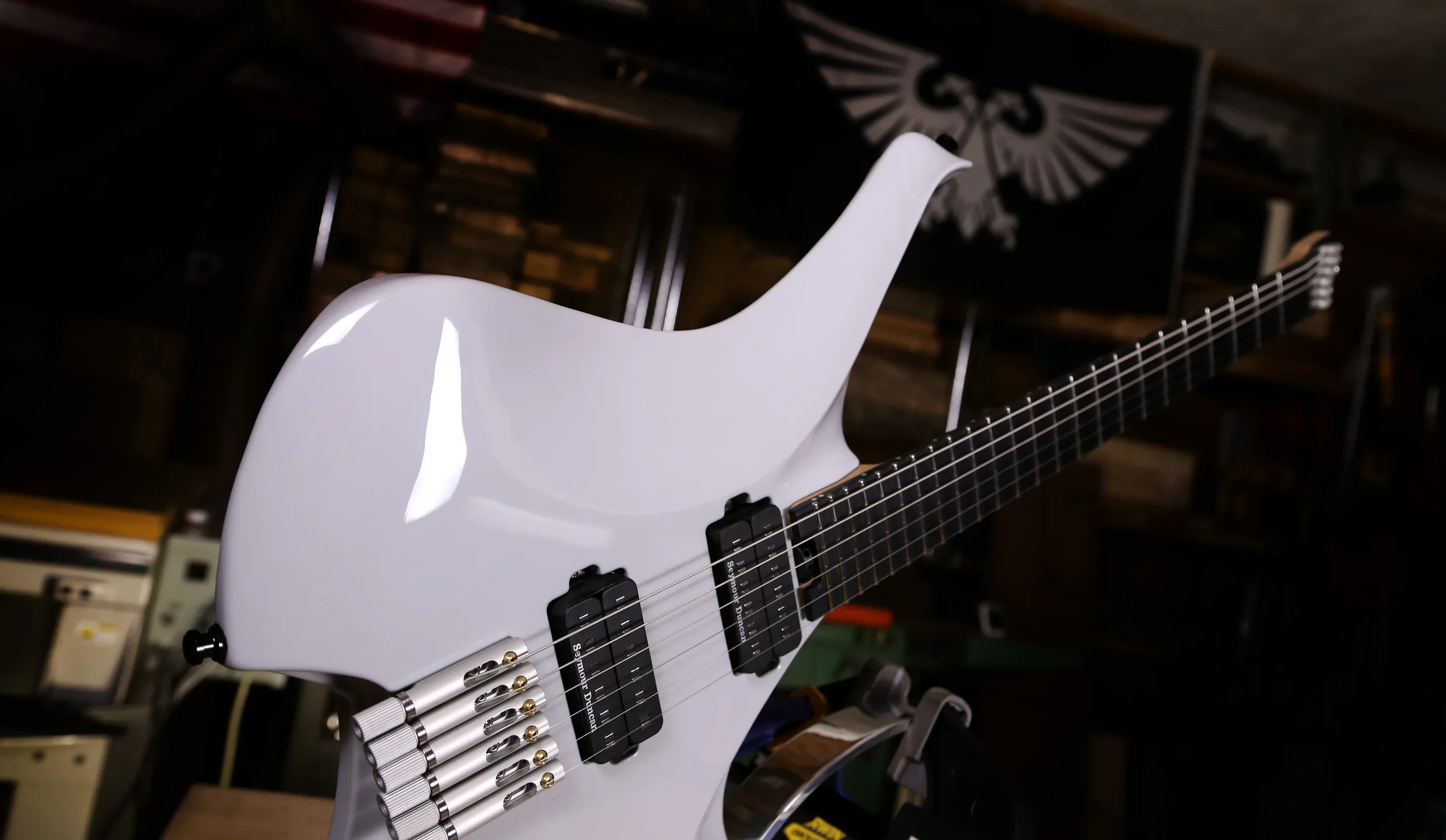
At this level, both routes can produce an instrument that performs professionally. A factory price pays in part for branding, endorsements, distribution, and feature markups. A boutique price goes more directly into wood, finish, labor, original design, and a small team’s time.
A boutique build may cost more, but the value is legible. The player is not simply paying extra for a flame-maple option or a marketing story; the entire guitar is resolved as a personal object.