
Overview
Comfort is essential to performance. An ergonomic guitar can reduce strain, improve posture, open up the fretboard, and help a player stay focused for longer without giving up tone or visual character.
The case for comfort
Why ergonomics matter.
Traditional instruments can create back strain, awkward posture, and fatigue over a long session. A guitar designed around the body lets the player relax, move with confidence, and spend more energy on the music.
Dean Gordon instruments combine modern ergonomic thinking with the presence, tone, and individuality expected from a custom guitar.
Lighter weight
Strategic carving and chambering reduce the physical load of the instrument.
Superior balance
Optimized weight distribution keeps the guitar settled instead of fighting the player.
Effortless fret access
Deep cutaways and a sculpted heel clear the path to the upper register.
Comfort in every position
The guitar is designed to feel natural whether the player is seated or standing.
Form follows the player
What defines an ergonomic guitar?
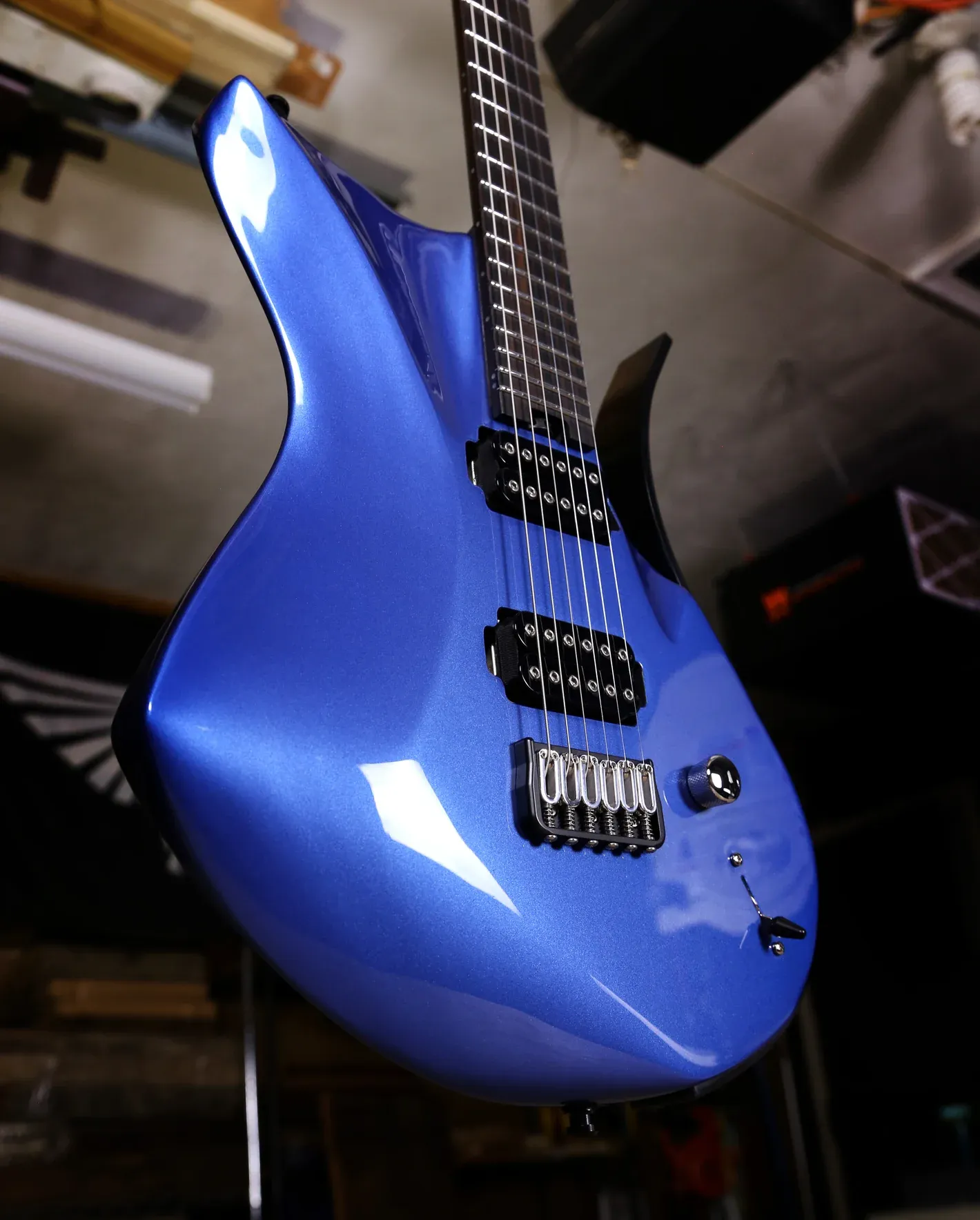
Ergonomics is not one feature. It is the cumulative effect of the silhouette, contours, hardware, controls, neck transition, and center of mass working together.
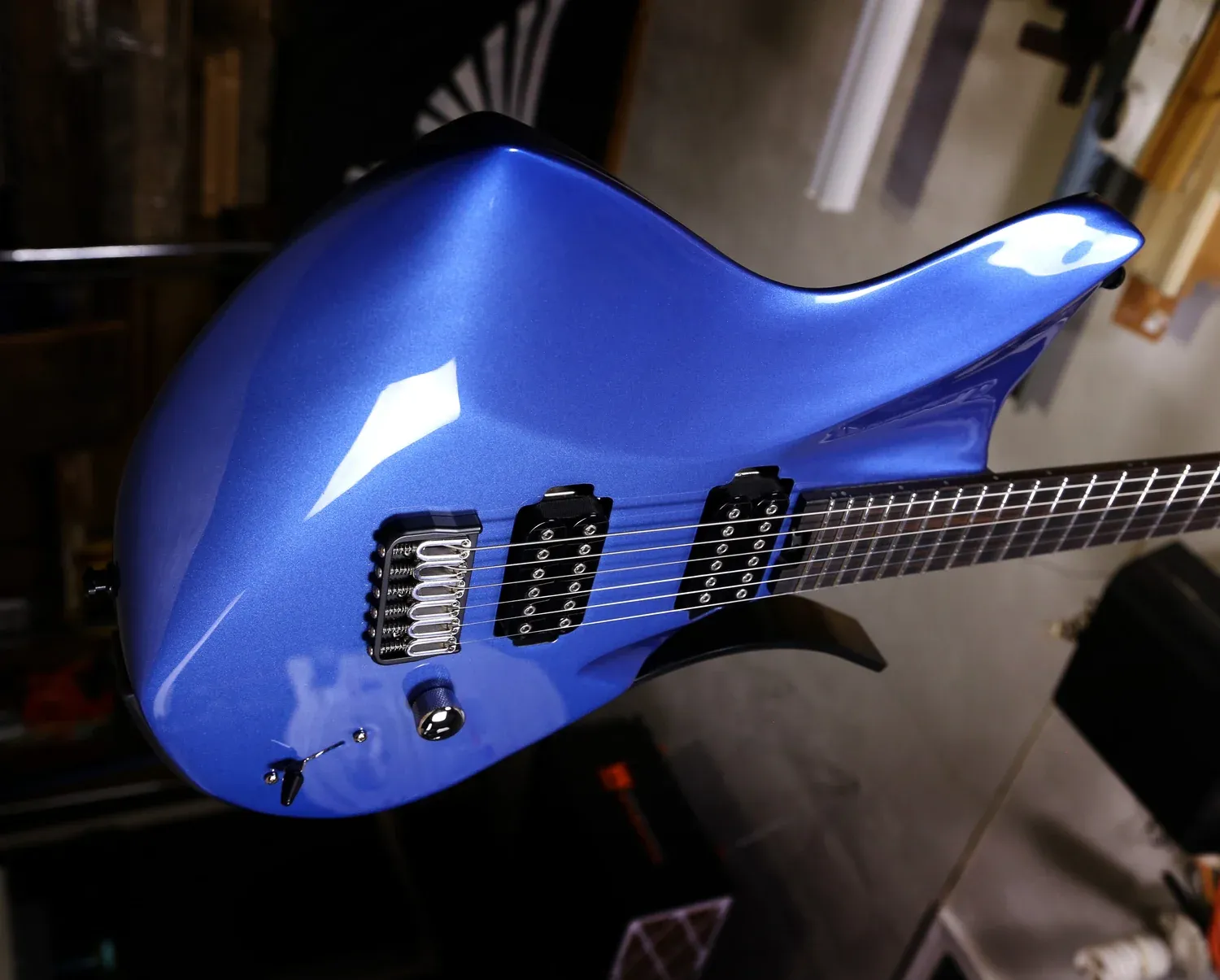
Deep cutaways
More room around the neck gives the fretting hand a clean approach to high notes.
Belly and arm bevels
Soft contact points let the body and picking arm rest naturally against the instrument.
Form-fitting shapes
The outline follows the player instead of forcing the player to adapt to a rigid slab.
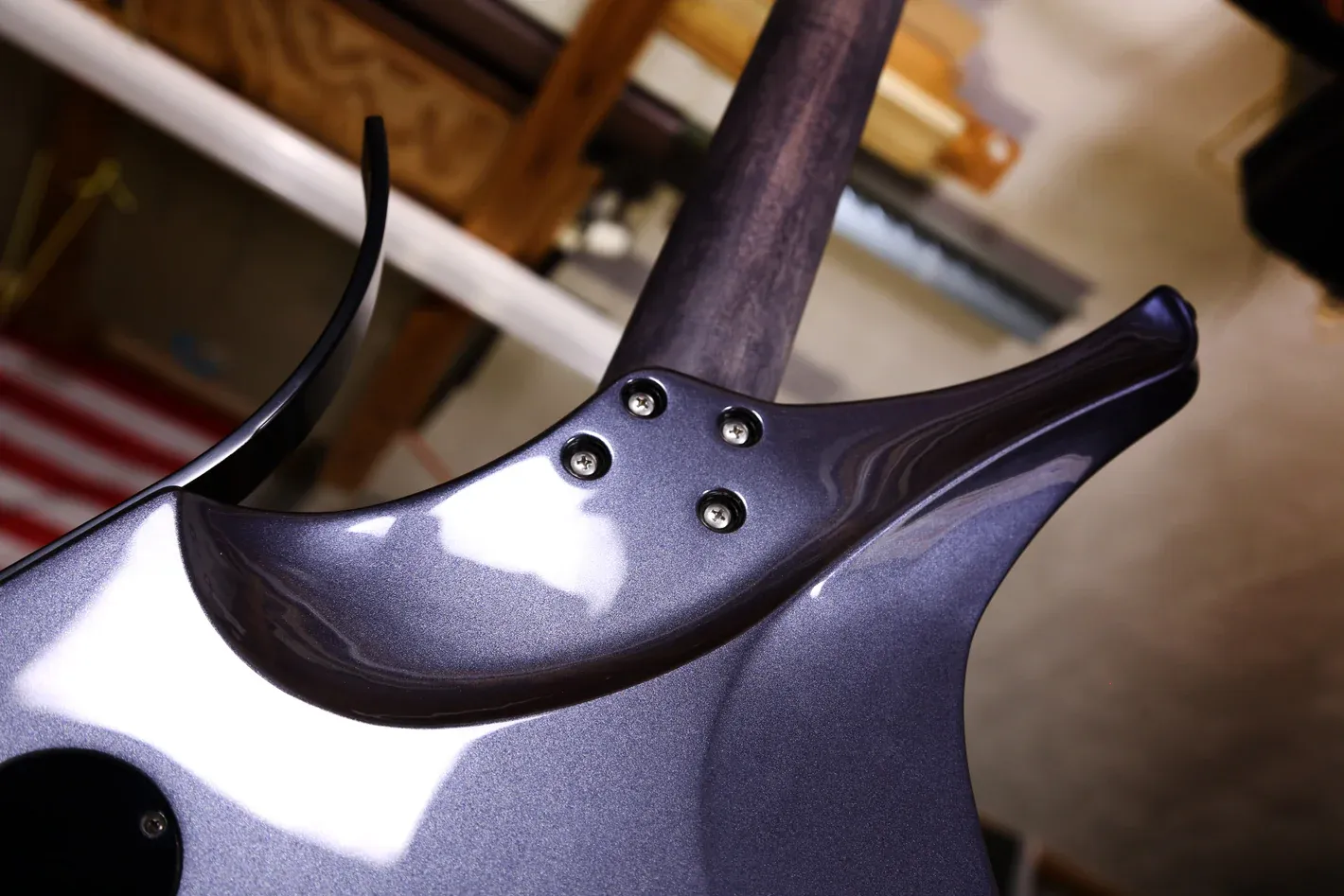
Smooth heel carves
A carefully blended neck joint removes the obstruction behind the upper frets.
Intentional control placement
Electronics remain accessible without getting in the way of the picking hand.
Weight reduction
Carves and chambers can remove roughly 10–40 percent of unnecessary mass, depending on the build.
Headless options
Moving the tuners to the body shortens the instrument and removes weight beyond the nut.
An honest assessment
Are there any downsides?
A more ergonomic instrument may feel unfamiliar at first, especially to a player who has spent years with traditional shapes. Comfort is also subjective, and modern silhouettes will not suit every visual taste.
For most players who value long-session comfort, upper-fret access, and balanced weight, those tradeoffs are outweighed by the practical benefits.
The Dean Gordon approach
Refining every point of contact.
Each design decision is made to help the player perform and feel better. The result is an instrument with a distinctive identity that remains physically intuitive.
Headless configurations
A compact option for players who want reduced length and improved weight distribution.
Streamlined carves
Material is removed where it improves comfort, movement, and visual flow.
Built one-to-one
Why commission an ergonomic guitar?
A custom ergonomic instrument is built around the way its owner actually plays. Scale, weight, balance, neck feel, hardware, and electronics can all be considered together instead of selected from a fixed production menu.
Tailored for comfort
The build can account for the player’s posture, preferences, and physical needs.
Advanced craftsmanship
Modern construction and careful handwork turn those requirements into a cohesive instrument.
Made for modern players
Extended ranges, technical playing, and contemporary hardware are part of the design language—not afterthoughts.